1. Understand What Revenge Trading Really Is
Revenge trading happens when a trader tries to recover earlier losses through aggressive or impulsive decisions. Instead of stepping back and reviewing their trading plan, they feel like they have to take action right now to repair the damage. This reaction increases risk and reduces the chance of making rational decisions.
The danger is that revenge trading feels completely justified in the moment. You believe you're fighting back, but emotionally driven trades are based on impulse, not analysis or reliable indicators. This often results in losing money rapidly and entering a cycle of poor trading performance.
Here's what's actually happening in your brain when you revenge trade. When you take a loss, your brain sees it as a threat. It triggers the same fight or flight response that kept our ancestors alive in life or death situations. That's how deep losing money goes in your subconscious. It's a survival response.
Your brain interprets financial risk as a survival threat because the amygdala, which is your brain's fear center, is responsible for detecting threats and triggering the fight or flight response. This response was designed to help you escape predators and react to immediate danger. But in today's world, it misfires in trading and makes you feel that same exact threat.
When you experience a financial loss, your brain reacts as if you just encountered a life threat. Your adrenaline spikes, your heart beats faster, and your rational thinking is completely gone. Which leads to your instincts taking over because you need to do something fast to get yourself out of that situation.
Imagine a trader who starts the day with a clear plan. You have your strategy. You have your discipline. Then a trade goes against you, you get stopped out, and you take a loss. You don't follow your stop loss, whatever. Instead of stepping back and looking at the market logically, your brain sounds the alarm... "Danger. Danger. You're losing resources!"
That's when the panic sets in and now you're placing bigger risk on your trades without even realizing what you're doing. You're reacting instinctually. You're ignoring your plan in an attempt to recover your precious resources.
Revenge trading is one of the most common signs that fight or flight has taken over your trading. Instead of slowing down and making rational decisions, you start acting on fear.
It's About Control, Not Strategy
Revenge trading is really an emotional reaction to losing control. It's all about having a sense of control over what's going on. Whether that's taking revenge against yourself as a punishment or revenge against the markets to win back your loss or end the day green.
When we experience a financial loss, the nervous system sees it as a loss of control. So many of us have control issues, right? Well, this is like the ultimate test of your control issues. And to regain that control, we're going to take bigger risks on our trades, force wins, and end up losing everything.
Here's the reality. With every loss you take, you are already in full control of every dollar you lose. It's not about being in control, it's about feeling out of control because you're angry at yourself for taking the loss because now your worth is being questioned. You're trying to control a situation to make yourself feel better, not trying to take the best opportunity.
And when you make a decision that makes you feel bad, this is what makes you feel out of control, not taking the loss. Because again, you have full control over how much you actually lose. But once you're trying to revenge trade, you can't control anything anyway. Now you're more out of control. You go until you blow everything.
What to Do When You Feel the Urge
The key to stopping revenge trading is learning to pause. If you feel the urge to make an impulsive trade after a loss, take a break. Step away and take a deep breath. Because you can't control anything once you're revenge trading anyway.
When you want to fix it fast and you feel the urge to size up right now, start tracking your tension. Rate your current body tension from one to ten before you enter. If your tension is above a six, if your body feels above a six tension wise, pause for five minutes before doing anything. Risky behavior is tied to high arousal and pausing lowers cortisol and restores access to logic.
Next you can do a micro-move reboot. Stand up. Shake your arms. Inhale for four seconds. Exhale for six seconds. Repeat that three times. This physically resets the nervous system because moving the body disrupts emotional momentum. When we can disrupt your emotional momentum by physical movement, it's going to reset your nervous system and get you back to baseline.
What if you're already in a revenge trade and it's risky? Say it out loud. "This trade was taken from emotion, not strategy." Why does this work? Because when you call yourself out in real time, it reduces shame spirals later and it helps you build honesty with yourself after the trade, which then helps you grow from your mistakes and understand why you did that.
The Damage Cap Protocol
Create a hard rule. One emotional trade equals shut down the charts and journal. This establishes a firm boundary that feels like safety, not punishment. But you have to stick to it. You cannot give into your emotions. So if you do take one emotional trade, you have to be like, "okay, I'm done for the day and I have to go journal about it."
When you over risk, it isn't about greed. You're not greedy for money. You're greedy about control. You're greedy about the dopamine hits. You're greedy about your emotions. Over risking is not about greed for profits. It's about using trading to regulate how you feel.
2. Recognize the Psychological Triggers Behind Revenge Trading
Understanding why revenge trading happens is a major step toward preventing it. Most instances begin with anger, frustration, disappointment, or fear. These emotions become stronger when a trader has unrealistic expectations, feels pressure to perform, or attempts to prove something to themselves after a losing trade.
Here's the deeper truth about those triggers. Every emotion you feel in trading... frustration, disappointment, fear, hope, even excitement, it all begins as an expectation. Neuroscientists call this a reward prediction model. Which is when your brain releases dopamine not when you win, but when reality matches what you predicted. When your brain says this trade should win and it does, dopamine reinforces that sense of control. You feel confident, focused, aligned.
But when that same trade loses, especially if you expected it to win, dopamine plummets and cortisol spikes. Your brain is then going to interpret that as a loss of safety, not just a loss of finances. This is not just disappointment. This is what researchers call a prediction error. It's the same exact response we see in studies on grief and rejection.
Other psychological triggers include fear of losing face, frustration with previous losses, anger toward market conditions, and the desire to restore confidence quickly. And the deeper your expectation, the deeper the pain when it's not met. If you've built your identity around being a really great trader, a loss is no longer just a loss, it's an identity rejection. Your brain is never going to read it as the setup failed. It reads it as "I failed."
And these emotional reactions distort the decision making process, which makes it easier to fall into impulsive decisions. Traders who understand their triggers can protect their capital more effectively and avoid repeating destructive habits.
3. Identify the Early Signs of Revenge Trading
Revenge trading has VERY predictable warning signs. When a trader learns to spot them early, they can prevent further damage to their trading account.
There is never a time in trading where you won't have a warning sign before your emotions take over. Typically, the signs are going to look like thoughts that won't stop.
- "I should get out now."
- "I should be taking profit."
- "I should screenshot this."
- "Oh, I don't think this is going to go my way."
- "Oh, this doesn't look great."
This is your subconscious brain warning you that you need to protect yourself now before you do something you regret.
Common signs include:
- Placing trades that do not fit your trading strategy
- Increasing position size after a losing trade
- Ignoring stop loss rules.
You might find yourself skipping analysis and entering trades emotionally, immediately jumping back into the market, or forcing trades during poor market conditions. Other warning signs are:
- Abandoning the trading plan or exit strategy
- Closing trades too early out of fear even if the trade still fits your plan
- Doubling down on risky trades to win back money after a loss
- Constantly checking your profit and loss.
One of the best ways to minimize your emotional response is to turn off your profit and loss and just focus on ticks, points, or whatever your system shows. If you're constantly checking the PnL, you're going to be emotionally attached to the outcome. And it's going to be impossible to focus on the process when the PnL is constantly flashing in your face.
When traders notice these behaviors, they should stop trading temporarily and regain emotional control before continuing. When you hear these thoughts, this is your "last warning." And when you ignore them, that's when your emotions take over.
4. Understand Why Traders Fall Into the Trap
Revenge trading doesn't come from a lack of knowledge. Most traders know they should follow their plan, but emotions become so overwhelming during moments of stress that logics shuts down completely. Several factors contribute to this behavior.
Pressure to recover earlier losses
A losing trade creates emotional discomfort and many traders try to remove that discomfort by placing another trade quickly, believing it will fix the situation. When this happens, your brain is scrambling to restore confidence in itself and to restore balance. The fastest way it tries to restore that balance is through control. "I'll fix it, I'll make it back, I'll find that certainty again."
But you're trying to soothe an emotional wound with external control. You're trying to regulate internal discomfort through external manipulation. And that never works because the more you chase certainty, the more fragile you become to uncertainty.
Cognitive biases
Loss aversion, recency bias, and unrealistic expectations are always going to distort judgment. When these biases kick in, they make a trader believe that the next trade will be the one that solves everything. And when risk becomes personal, it's very hard to be detached in your trading. Distress flips your goals without you even realizing it, and you start to trade to relieve tension, not to exploit your edge.
Volatile market conditions
Sudden price movement, central bank decisions, and unexpected news can amplify emotional reactions and push traders into high risk decisions.
Desire to feel in control
When a trader feels that the market has taken something from them, they may try to regain power through aggressive trading. We stop fearing the loss and we start fearing what the loss means about us.
Understanding the reasons behind revenge trading allows traders to interrupt the cycle and return to rational decision making.
5. Strengthen Your Risk Management Strategies
Risk management is one of the most effective tools for preventing revenge trading, if done correctly. When risk is controlled, emotional impulses lose their intensity.
Strong risk management strategies include using stop loss orders, consistent position sizing, maximum daily loss limits, rules for when to stop trading, and guidelines for high risk market conditions.
Here's a little trick to know if you're trading within a limit your brain can handle is this... If you feel your emotions kicking in when you're losing that amount of money, you're trading with too much money. Your position size is too big. If you can lose the amount of money you agreed upon before your stop loss hits and feel nothing, your brain is accustomed to be able to handle that amount of trading.
You need to work your way up to those levels. You need to build that discipline and tolerance. If you're feeling nervous when that stop loss hits and it feels really icky inside and you feel all your emotions flooding in, you're trading with too much money.
When traders know exactly how much they can lose on a trade, they reduce the emotional pressure that causes poor decision making. This protects the trading account and helps maintain discipline during periods of emotional stress. Your risk management style can also include locking yourself out of your account to prevent over trading. Two losses max can stop you from over trading. A daily loss limit can keep your risk down.
The key is understanding why your risk management rules work for you. When you put two and two together about why your plan works for you, you're building awareness of your patterns. You're teaching your brain that what you're doing is safe, what you're doing is okay, and you're building the good habits to get you over that hump.
Track Your Patterns With TradePath AI
One of the most powerful risk management tools you can use is tracking your emotional triggers, not just your setups. For me, I'm a visual learner. So I like to write everything out with pen and paper first, then I plug it into TradePath AI. When I plug it into TradePath, that allows me to pull different connections for everything and helps me to recognize different patterns.
Writing it out helps me to process it. Then entering it all into TradePath after helps me to understand and see different connections, habits, and behaviors. This is like the cheat code of exactly how to become a profitable trader. When you track the triggers alongside your trading setups, you're able to see things like Mondays are my worst trading days because of this, or when this happens I tend to get more emotional, or when I see big jumps this happens.
The more you can become aware of what to avoid and what to enhance, that is how you build your edge. That is how you build your strategy. By focusing on your psychology in your journal, that is going to really build your edge in a way that nothing else can. Journaling is an absolute powerhouse for trading psychology, not just for technical refinement. This is what helps you to see your emotion and dopamine loops clearly instead of being ruled by them.
6. Build a Well-Defined Trading Plan That Removes Guesswork
A trading plan is essential for disciplined performance. With a well-defined trading plan, traders no longer need to make decisions based on emotion. Instead, they follow a structured approach that clarifies when to enter trades, when to exit, how to manage risk, and how to respond to different market conditions.
A strong trading plan includes your trading strategy, entry and exit rules, stop loss placement, position sizing, trading routine, rules for when to stop trading, and adjustments for changing market conditions.
Here's why this matters so much. A well-defined plan removes emotion from the equation. When I stick to my plan, my emotions are nowhere in sight. I can close down my screen and I'm off with my day. I don't think about trading for the rest of the day. If you stick to your plan, your emotions won't come in.
Your plan needs to be specific, not just "enter after a breakout." It needs to be "enter after 15 minute close above resistance with preset stop loss at previous structure." Your risk also needs to be specific. "1% of account with a lockout in place after two losses." Your exit needs to be specific. "Take 50% profit at first target, take 30% profit at second target, leave a runner following the 13 EMA, close position when EMA is broken."
When you understand your trading style and why it fits you, you build a plan that actually works.
Your daily trading routine matters too. This is when you trade, how you prep, how you wind down. A quick five minute meditation and a piece of fruit before jumping on the charts, a splash of cold water to wake you up, or maybe one hour of premarket with coffee. These routines help you feel calm and put you in the right state of mind.
When traders rely on structure rather than emotion, their performance becomes more consistent and their risk of revenge trading decreases substantially. Discipline is not about willpower, it's about creating an environment, both internal and external, where your nervous system feels safe enough to repeat healthy behaviors.
7. Use a Trading Journal to Track Emotional Patterns
A trading journal provides valuable insights into your behavior because it helps you identify emotional triggers, cognitive biases, and patterns that lead to poor decisions. Over time, you will notice recurring situations where revenge trading tends to appear.
Your journal should include details of each trade, emotional state at the time, whether the trade followed your plan, market conditions, and lessons learned.
And here's what makes journaling so powerful... When you physically write something down with pen and paper, your brain processes it differently than if you just think it or type it, which means you're going to remember it better and learn more from it by doing it this way.
This is why journaling is one of the best and number one used practices in most therapeutic offices. It helps you to process things better. Exercise and physical writing are two of the only proven ways in mental health to be able to process and regulate your emotions without needing therapy in a healthy manner.
For your next five trading sessions, keep a journal where you record your emotions before, during, and after each trade.
- What triggered your emotions?
- How did these emotions impact your trading decisions?
- Track every tilt trigger you notice.
- Even if you don't go on tilt, note the exact moment your emotions started, what you felt in your body, and what you did next.
The goal is to build awareness because you can't fix what you can't see. If you do this for a week, you're going to spot patterns that you've never noticed before. Those patterns are the first step to building real emotional control in the market.
By reviewing past performance regularly, traders can identify emotional tendencies that cause losing trades and adjust their strategy accordingly. Tools like TradePath AI can analyze journal data and help traders identify patterns that are difficult to notice manually.
8. Create a Healthy Trading Schedule and Routine
A consistent trading routine helps maintain emotional control, and without structure, stress builds more quickly and leads to impulsive reactions.
A healthy routine includes a scheduled start and end time, planned breaks during the session, a premarket preparation checklist, a post market review, and dedicated time to reflect on performance.
And from a nervous system perspective, when you can have routines to fall back on, it is so much easier to revert to routines than decisions. When you're fatigued, your habit system takes over instead of your emotions. Meaning you don't need to have infinite willpower or discipline to be a successful trader, you just need systems to protect you when your willpower runs out.
Build an execution routine that is really simple and repeatable for yourself to fall back on.
- Open plan
- Execute
- Reflect
- Close
This helps your habit system take over when your logical brain is tired rather than your emotions taking over.
It also helps to take cognitive breaks throughout the day. Walk away from the screen between your trades, use five to ten minute breaks to reset your nervous system, whether it's deep breathing, jumping jacks, nature, silence, or grounding exercises, and avoid scrolling social media. Social media adds more micro decisions to your day. When you scroll on social media, you get a dopamine release roughly every 19 seconds, and that's going to make you more likely to have your emotions take over.
And lastly, understand that rest is not optional. It is a strategy. It is one of the most crucial parts of becoming a profitable trader. Your clarity depends on recovery between your trade cycles. If you take a big loss and you're emotional about it and you jump into back tests and strategy videos and journaling nonstop without allowing your mind time to process what happens, you will never be able to get past it.
Taking a temporary break after a significant loss can prevent revenge trading by allowing emotions to settle. Just like in the gym. Muscle grows during rest. In trading, discipline and clarity grows during rest.
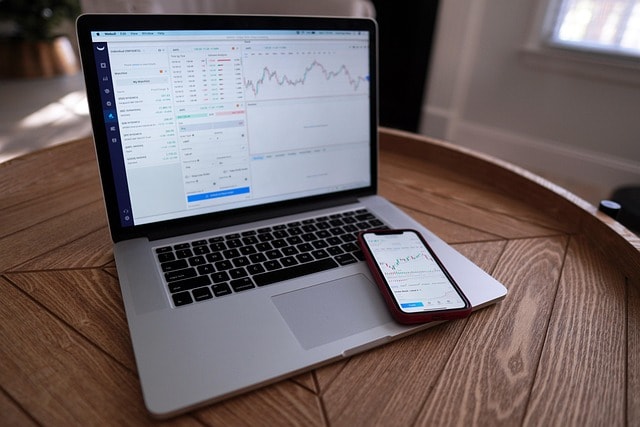
9. Leverage Technology to Reduce Emotional Trading
Technology can help traders avoid emotional impulses by providing objectivity and structure. Automated trading systems execute trades based on predefined rules, removing the emotional component entirely. Reliable indicators, analytical tools, and performance insights help traders make decisions based on data rather than impulse.
Platforms like TradePath AI offer valuable insights by analyzing behavior, identifying emotional triggers, and highlighting areas where a trader deviates from their plan. This information allows you to be able to make better decisions and reduces the risk of revenge trading.
Tracking technology is super helpful because you're not just tracking setups, you're tracking emotional triggers alongside your setups. This is the cheat code of exactly how to become a profitable trader. When you track the triggers alongside your trading setups, you're able to see things like Mondays are your worst trading days because of this, or when this happens you tend to get more emotional, or when you see big jumps this happens.
And the more you can become aware of what to avoid and what to enhance, that is how you build your edge. That is how you build your strategy. This awareness helps you to see your emotion and dopamine loops clearly instead of being ruled by them.
What counts as a productive trading day?
- Journaling an emotional trade and how it made you feel.
- Reviewing your clean setups from the past and studying the precision.
- Walking away when cortisol hits to regulate your nervous system.
- Practicing a full session of observation without execution.
These are not doing nothing. These are the exact actions that most emotional traders never take.
10. Stay Disciplined and Focused During Your Trading Journey
Discipline is the foundation of high performance trading. Without discipline, even the best strategy fails under emotional pressure. But traders who remain committed to their plan, manage emotions proactively, and follow consistent routines improve their trading performance over time.
To maintain discipline, you have to avoid impulsive decisions, follow your plan consistently, manage emotions intentionally, step back when emotional pressure increases, and trust your long term process. Easier said than done, right?
Here's the truth about discipline. If discipline were about willpower, you wouldn't be struggling. You already know what to do. You already know your strategy. But the second a trade goes red or draw down kicks in, something changes, and before you know it, you're breaking every rule you swore you'd follow.
Discipline has nothing to do with willpower and everything to do with emotional regulation. When your nervous system is overloaded, when it has too much cortisol, poor sleep, and/or unmet needs, the logical thinking part of your brain that governs follow through gets shut down. This impacts your resilience and recovery abilities, taking away the ability to even practice discipline.
Winning trades are secondary in trading. The focus needs to be on building consistency by behaving in alignment with your values regardless of the outcome. If you do that, the money will follow. If you chase the money, you'll be left panicking every time it doesn't go your way.
- Track your behaviors, not just your outcomes.
- Did you follow your rules?
- Did you stop when you said you would?
You want to anchor your discipline to action instead of outcome. Because that means you'll actually be tying your discipline to something you have control over. You have no control over the outcome of the trade. And if that's what you're basing your success on, you'll constantly be chasing the market and trying to control it. But if you focus on what you can control, the profits will follow effortlessly.
And an easy way to do this is to create a discipline scorecard.
- What percentage of trades followed your stop loss?
- What percent of sessions did you execute your plan fully?
- The number of times you paused before reacting emotionally.
This moves the needle from being outcome focused to process based, and it builds that trust in yourself because you're tracking the behaviors that lead to success, not just the dollars.
Successful traders focus on consistency rather than short term fluctuations. They understand that discipline protects their trading account and helps them achieve sustainable results. When you shift that mindset from outcome driven to process driven, that's when everything really starts clicking.
Conclusion
Revenge trading is a serious risk for traders, but it can be prevented with awareness, discipline, and structure. By understanding the psychological triggers behind revenge trading and recognizing the early signs, traders can protect their capital and avoid significant financial losses.
A well defined trading plan, strong risk management strategies, and emotional control are essential for long term success. Tools such as trading journals and AI based insights provide additional support by highlighting patterns that influence decision making.
By prioritizing discipline, structure, and self awareness, traders can avoid the pitfalls of revenge trading and build a more profitable and sustainable trading journey.
FAQS
What is revenge trading and why is it harmful for traders?
Revenge trading happens when a trader responds to a losing trade with an emotional urge to recover losses quickly. Instead of following a trading plan, the trader reacts impulsively and takes high risk positions. This behavior often leads to further losses, damaged trading capital, and a decline in overall trading performance. The emotional response is what makes revenge trading so harmful, because it replaces strategy with frustration, fear, or anger.
What are the most common signs of revenge trading?
Typical signs include ignoring risk management rules, increasing position size after a losing trade, taking trades that do not fit your strategy, and immediately jumping back into the market without analysis. When traders begin placing trades out of frustration or emotional turmoil, these reactions indicate that they may be entering a self destructive cycle.
Why do traders fall into revenge trading even if they know it is risky?
Many traders fall into revenge trading because emotions overpower rational thinking after a loss. Cognitive biases, unrealistic expectations, and emotional pressure to recover trading capital all influence the decision making process. When a losing trade triggers frustration or disappointment, it becomes increasingly difficult to make calm, strategic choices, which is why many traders fall into this pattern despite knowing the risks.
How can I prevent myself from slipping into revenge trading?
Prevention starts with a well defined trading plan and strong risk management strategies. Using a trading journal helps identify emotional triggers, while a consistent trading routine supports discipline. Taking a temporary break after a significant loss can also reset your emotional state and stop impulsive decisions before they escalate. The more structure you add to your trading approach, the easier it becomes to avoid revenge trading.
Can technology or AI tools help reduce revenge trading?
Yes. Tools such as automated trading systems and behavioral analytics platforms help remove emotional influence from your trading decisions. They provide objective data, track psychological tendencies, and highlight moments when you deviate from your trading plan. Platforms like TradePath AI offer valuable insights into emotional patterns, making it easier to stay disciplined and prevent revenge trading.
.png)
.png)